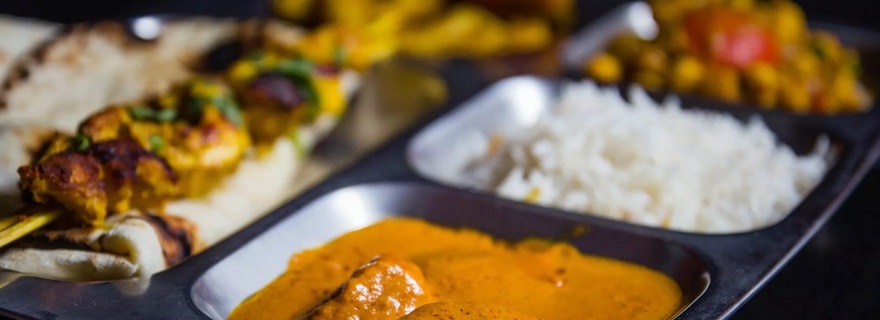

Hot? Not exactly.
Many of us associate Indian cuisine with spicy dishes, but that's not entirely true. While you don't have to look far to find properly spicy food, it's just as easy to come across mild to sweet dishes.
Moreover, India is vast and diverse, which means you'll encounter a lot of regional variation, reflecting not only climatic differences but also religious traditions, for example. It's not so easy to pick out the most typical dish of the local cuisine.
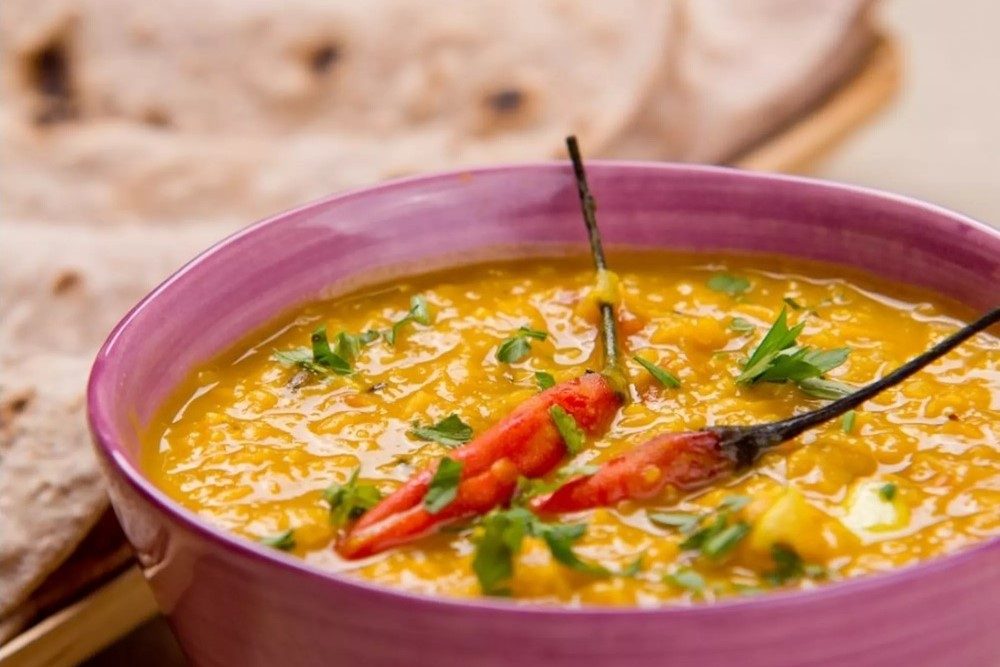
Fresh ingredients and spices as the basis for balanced dishes
Fresh ingredients as well as spices can be considered as such a general foundation of Indian cuisine. Around 20 to 30 varieties form the very basis! Every spice, from turmeric to cardamom, has an impact on the final taste and makes a harmonious whole, but it's not just about taste, the health benefits of spices also play a role.
Legumes, cereals and rice are also another necessary ingredient in Indian cuisine. However, rather unusually for Asia, dairy products are also used in abundance. As far as meat is concerned, chicken, lamb and mutton are the most common. Beef and pork are not to be found here, while the Hindu part of the population does not eat beef and the Muslim part does not eat pork. The Buddhists avoid meat altogether.
In terms of preparation, you will find boiling, stewing, frying, baking and grilling. There is something for everyone.
Indian cuisine will also please gluten-free people
Did you know that Indian cuisine does not usually use flour for thickening? Even if the sauces are thick enough, they do not contain gluten, because they are thickened with cooked legumes or vegetables. Plus, if you choose rice as a side dish, you're in the clear.
Learn to cook Indian cuisine like a pro
Are you salivating? You don't have to travel hundreds of kilometres to find good Indian food, you can make this culinary symphony at home. If you don't want to learn by trial and error, head to an Indian cooking course where a professional chef will take you through the basics so you can build on them.
And what will be prepared on the course?
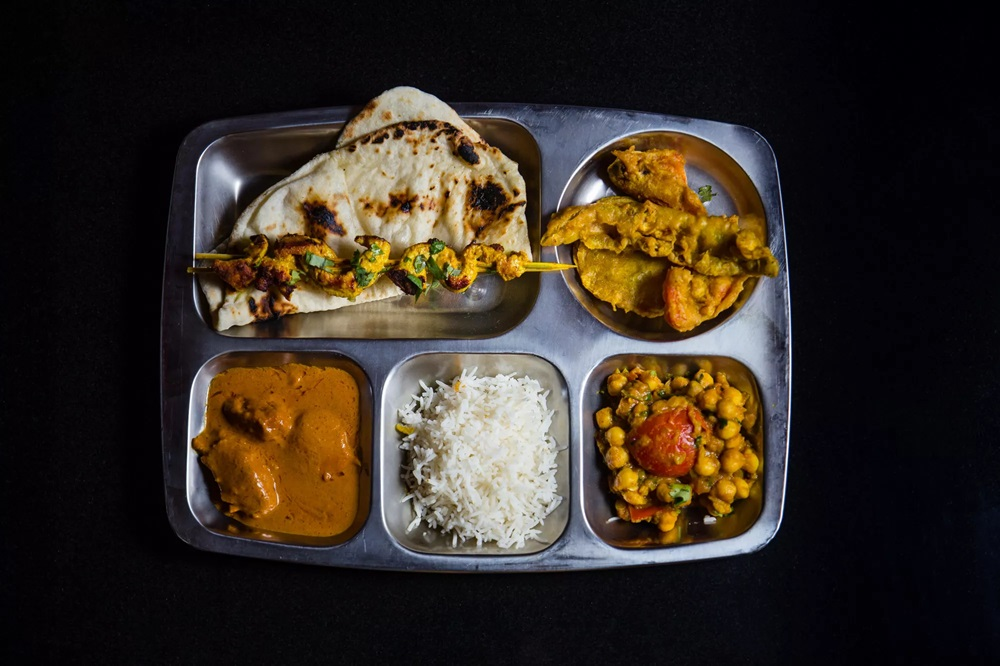
You can't miss the naan flatbread, which is a typical accompaniment to many dishes. Meatless food lovers will love the chickpea mixture chana masala or pakoras - vegetables coated in batter. Meat eaters will enjoy the traditional chicken tikka masala or chicken murgi malai with coconut sauce. The good news is that what you cook, you'll also enjoy to the last bite.
TIP: Already got India down pat? Choose another one of the cooking courses that will give you a taste of the world.
Shorten your wait with proven recipes
Want to enjoy it now? Try a recipe for chicken korma, a mild sauce made with coconut milk that's gluten-free.
Recipe for chicken korma
Prepare 4 servings of delicious korma with rice. Count on the fact that you have to prepare some of the ingredients in advance, a lunchtime quickie it is not.
Ingredients for preparing the meat:
- 600 g chicken (thigh or breast fillets)
- 100 ml coconut milk
- 1 teaspoon ground turmeric
- 1 teaspoon sweet paprika
- 2 teaspoons garam masala spice
- salt to taste
- optional - chilli spice to taste
Sauce ingredients:
- 40 g peeled almonds
- 25 g ghee
- 300 g onions
- 4 cloves of garlic
- 20 g fresh ginger
- 1 teaspoon ground turmeric
- 1 teaspoon ground cumin
- 0,5 teaspoon ground cardamom
- 400 ml coconut milk
- water or broth as required
Procedure:
- Soak the almonds in lightly salted water 8 to 12 hours in advance - soaking makes the almonds more digestible and also makes them easier to blend.
- Prepare a marinade of coconut milk, turmeric, sweet paprika and garam masala (spicy lovers can also add chilli).
- Cut the meat into cubes and marinade for at least 30 minutes, but it is better to leave it marinated in the fridge overnight.
- When it's time to prepare the meat, season the mixture with more salt and fry it in a pan with a sufficiently heated ghee. The meat needs to be fried really hot so that it doesn't start to release its juices.
- Leave the meat aside and fry the finely chopped salted onion in the fat left in the pan until brown. Be careful not to burn them and spoil the taste of the resulting dish.
- Once the onions are nicely caramelised, add the crushed garlic and grated ginger. Keep stirring until the ingredients are nicely softened.
- Add turmeric, ground cumin and cardamom to the mixture and sauté briefly.
- Blend the almonds in the coconut milk until smooth and add the mixture to the pan and let it come to the boil.
- Once the mixture has simmered for a few minutes, blend it until smooth. If it is too thick, it can be diluted with water or stock.
- Finally, add the browned meat and heat everything well.
Serve with rice. Enjoy!