

What makes Italian cuisine enchant you?
It's no coincidence that Italian cuisine has risen to the top of the gastro world. It emphasises the high quality of the ingredients used, as well as their freshness. The regional diversity certainly plays a part in this, with something for everyone.
Another advantage is that the dishes are not only tasty but also healthy. Fresh, seasonal ingredients are used a lot: vegetables, fruit, herbs and seafood, for example. Of course, there is also olive oil full of antioxidants and vitamins.
Lunch is not a quick fix
Are you used to just throwing something together quickly at lunch and finishing up in the evening? You wouldn't succeed in Italy. Dinner is just a quick snack, but lunches are pretty rich. So if you'd like to go for an unadulterated Italian lunch, prepare for anantipasto starter, a first course(primo) of soup, asecondo main course and then a dessert(dolci) or fruit(frutta). The portions are proportionate to the number of courses, so it's about enjoying the meal, not stuffing yourself to bursting.
Are you tempted by recipes from Italian cuisine? Take a cooking class!
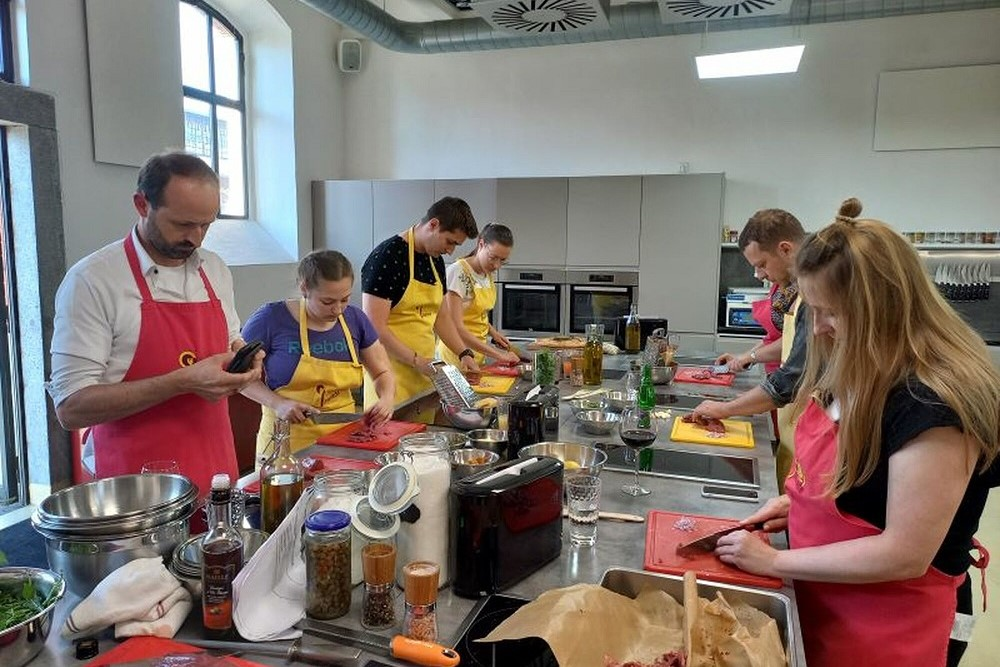
Want to experience the flavours of Italy and not just imported pizza that's far from the real thing? Take an Italian cooking course where you'll learn to cook the best dishes under the guidance of experienced chefs.
During the approximately three-hour course, you'll learn all the ingredients you need to make homemade pasta, bolognese, tartar sauce and even potato gnocchi (which you'll never call gnocchi again, but you'll know they're gnocchi). Don't worry, you won't miss out on the sweet spot either - chocolate fondant with sour cream rounds off the cooking school nicely.
Shorten your wait for the course by making pesto and homemade pasta
Before you head off to the Italian cooking class, make traditional basil pesto at home. It takes a few minutes and the taste experience is amazing.
Recipe for basil pesto
Ingredients for 4 servings:
- 3 handfuls of basil leaves
- 1 handful of pine nuts
- 2 small cloves of garlic
- 1 handful grated Parmesan cheese (or Grana Padano or Pecorino)
- about 5 tablespoons of olive oil
- salt to taste
Procedure:
- The traditional preparation of the pesto is done in a mortar. But if you reach for a blender, no one will scold you for it. :)
- First, put the pine nuts and garlic in a mortar or blender and blend them.
- Then add the washed and dried basil and process it thoroughly.
- Next comes the oil, salt and grated cheese. Mix everything once more. It's up to you if you prefer a smoother paste or if you appreciate the visible bits of nuts and cheese.
- The pesto is ready to eat immediately. If you would like to store it, put it in a jar and drizzle the surface with olive oil to prevent air from getting to it. Store in a sealed jar in the fridge.
TIP: If you'd like to keep the basil you've bought alive, we recommend transplanting it into an herb potting medium that has plenty of nutrients. Store-bought substrate is already devoid of them and the basil has nothing to draw on. Also, you need to get it used to the sun gradually and not put it on the windowsill immediately after purchase. Then just don't forget to water it. Basil is quite thirsty, but should never float in water, so always pour off excess water from the saucer.
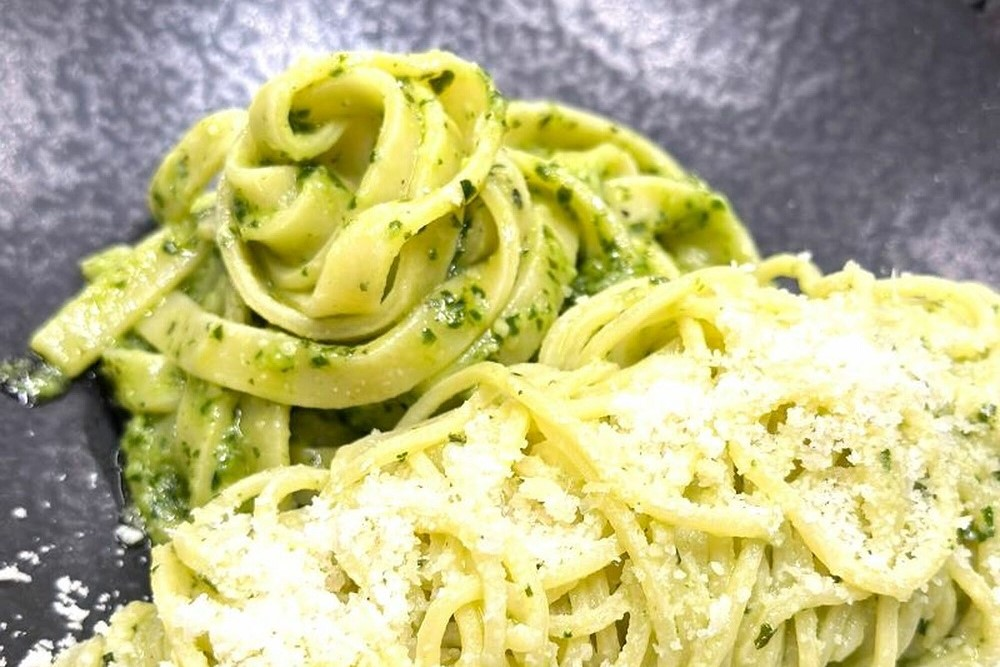
Recipe for homemade tagliatelle
For homemade pasta you will need semolina (or plain durum wheat flour) and eggs. This is in the ratio of 1 egg per 100g of flour. So it's up to you how much pasta you make. Pasta with egg is more pliable and easier to work with.
If you would like to make a stock of pasta, choose the eggless version, where you will need 150 g of wheat flour, 150 g of semolina and 150 ml of cold water.
Procedure:
- In both cases, mix the ingredients together to make a just-right sticky dough, which you leave to rest for about half an hour wrapped in a wet tea towel or cling film.
- Then either run the dough through a pasta machine or roll it out into a thin sheet using a rolling pin (ideally on a wooden rolling pin dusted with flour).
- Cut the rolled out sheet into thin strips and leave them to dry for a while so that they do not stick together in the pot.
- Then just drop the sliced tagliatelle into boiling salted water and cook for a few minutes to give them a bite.
And you can serve. Buon appetito!